


Основной
| Конструкция | Пружинная |
| Цвет | Оранжевый |
| Состояние | Новое |
| Форма | Фигурная |
| Производитель | Calorie |
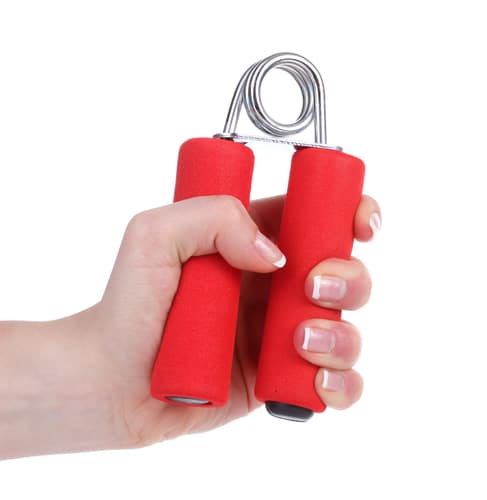
Men have a greater grip strength than women, but grip strength starts to decrease in both sexes by the late 30s as muscle mass declines. Not only is grip strength a reflection of muscle mass, but some studies also show it may be a good initial screening test to identify women at higher risk for osteoporosis.
Even more interesting – some research shows that grip strength is a predictor of overall mortality in middle-aged and older adults. Since grip strength is an indirect reflective of muscle mass and functional status, a decrease in hand grip strength is predictive of an increased risk for future disability. It’s also correlated with nutritional status. With reduced calorie intake, you lose muscle mass and grip strength decreases. Research shows that declines in hand grip strength are linked with protein loss and loss of muscle mass.
What’s a good grip strength for a female? It varies with age. Between the ages of 30 and 34, normal would be between 21.5 and 35.3. Anything above 35.3 is “strong.” Between the ages of 50 and 54, 18.1 to 31.9 is normal and above 31.9 puts you in the strong category. You can find full charts showing normal values for grip strength by age online. As you might expect, your dominant hand has a stronger grip, usually about 10% greater. If you measure your own grip strength, test both hands and average the two values.
Should You Do Exercises to Strengthen Your Hand Grip?There are a variety of squeeze devices you can use to exercise the muscles in your hands. You can even squeeze a rubber ball to work the muscles that control your grip, but if you strength train other parts of your body using barbells, dumbbells or resistance bands, you give the muscles in your hand a workout anyway. They’re along for the ride.
Hand grip strength is a reflection of your overall strength and fitness. If you have a strong hand grip for your age, you’re more likely to have good nutritional status and have a relatively high percentage of lean body mass for your age. Without weight training, adults become sarcopenic with age, meaning their body fat percentage goes up and their muscle mass declines. They become “skinny-fat” and more prone to falls and injuries. The way to avoid this is to resistance train with weight that’s challenging enough to build lean body mass. If you’re succeeding, your hand grip should reflect it since it’s a surrogate marker for overall strength.
Working on hand grip strength in isolation won’t improve your fitness. You’re better off spending your time working larger muscle groups to build lean body mass unless you participate in a sport where hand strength is vital like rock climbing, tennis, judo or wrestling.
The Bottom Line?The strength of your grip is a reflection of your strength and muscle mass – and, if you’re older, a weak hand grip is a predictor of future disability. Not only does it help you take tops off of jars, but it also says something about your overall health and fitness level. If your grip is weak, it’s time to work a little harder with the weights.
Эспандер кистевой grip strength ruiyinuo
- Как наложенный платеж, только без переплат
- Вернем деньги, если что-то пойдет не так
- Bigl гарантирует безопасность